


Workplace safety is everyone’s responsibility at Schoeller — on the production floor, in the warehouse, on internal traffic routes, and in office areas. Every day, attentiveness and consistent safety practices make the difference.
“Safety and health protection are our absolute priority. No order and no deadline is more important than our employees’ health,” says CEO Alexander Mertens. That standard is meant to guide every task and every decision — even under time pressure.
Experience shows that accident causes are rarely purely technical. More often, they stem from inattention, haste, lack of coordination, or safety measures not being consistently followed. This is exactly where Schoeller is focusing its efforts. Near misses play a particularly important role: they reveal risks before an accident occurs. Reports can be submitted easily via the SchoellerGO intranet, at terminals in the production area, or through supervisors and safety officers.
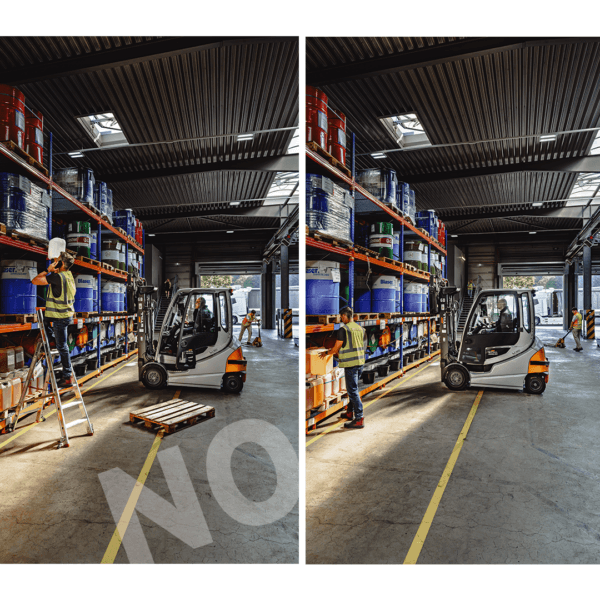
To raise awareness of everyday hazards, Schoeller produced a photo: a deliberately staged scene from daily production operations illustrates common situations where safety rules are overlooked — from missing personal protective equipment to distraction caused by phone use. The goal is to sharpen employees’ eye for unsafe behavior before it leads to a real incident.
To benchmark its safety performance, Schoeller uses the accident frequency rate (AFR), which measures reportable accidents per one million hours worked, allowing for a fair comparison across periods with varying workloads.
The team has also welcomed a new safety specialist, who now serves as the central point of contact for questions, suggestions, and reports related to safe working practices.
The goal at Schoeller is clear: a safety culture in which colleagues look out for one another, raise hazards early, and consistently follow protective measures — so that everyone gets home safely.
Note: The scene shown in this photo was staged in a controlled setting for communication purposes only. It was created in the presence of our safety specialist; all depicted situations were static, with no actual movement or activity taking place.